
How I Taught My Kids to Help Keep Our Home Clean (and Why It Matters)
For as long as I can remember, I’ve had a hard time focusing or staying motivated when surrounded by clutter and messes. This “everything must be clean” mindset quickly became a hindrance to my daily life—causing anxiety, overwhelm, and burnout.
I’d try to do it all myself, only to feel like a failure when things got messy again. Eventually, I knew something had to change. Over time, I formed a routine that lightened my mental and physical load while including my children in the daily tasks.
Here’s what helped me reclaim peace in our home.
Was Minimalism the Answer?
I started by purging anything that didn’t serve a purpose or didn’t have a proper place.
If I had to keep moving an item from spot to spot, I let it go.
Here’s what that looked like in action:
- Downsized the toy collection — if we already had something similar, I re-gifted or returned it.
- Simplified our wardrobes — capsule wardrobes helped cut my laundry time dramatically.
- Cut back on kitchen clutter — I stopped buying new mugs or gadgets unless they replaced something useful.
- Cleared cabinets of unused tools — if it hadn’t been used in months, it was gone.
These small steps reduced the things I had to manage, giving me more energy to care for the people I love most.
Introducing Age-Appropriate Chores
I know this can be a controversial topic, but here’s my view:
I’m not just raising children—I’m raising future adults.
From the time they could walk, my kids wanted to mimic me—sweeping, washing dishes, folding towels. It wasn’t perfect (or fast), but teaching them early built confidence and teamwork.
Here’s what that looked like by age:
Ages 2–3
- Sweep with a hand broom or sweeper
- Rinse dishes or load dishwasher with help
- Wipe their table or high chair tray
- Pick up toys and put them in bins
- Put dirty clothes in the hamper
- Fold small laundry items (socks, washcloths)
- Carry lightweight groceries (bread, fruit)
- Help feed pets (with supervision)
- Water plants with a small cup
Ages 4–5
- Load/unload dishwasher (safe items)
- Wipe counters and tables after meals
- Dust furniture
- Fold and put away clothes
- Help set the table
- Sweep floors
- Help pack their own snacks/lunches
- Collect trash and recycling from small bins
- Match socks and pair shoes
- Put away light groceries
Ages 6 and Up
- Take out trash and recycling
- Vacuum rugs and carpets
- Sweep and mop floors
- Prepare simple meals (sandwiches, cereal)
- Load/unload the washer and dryer
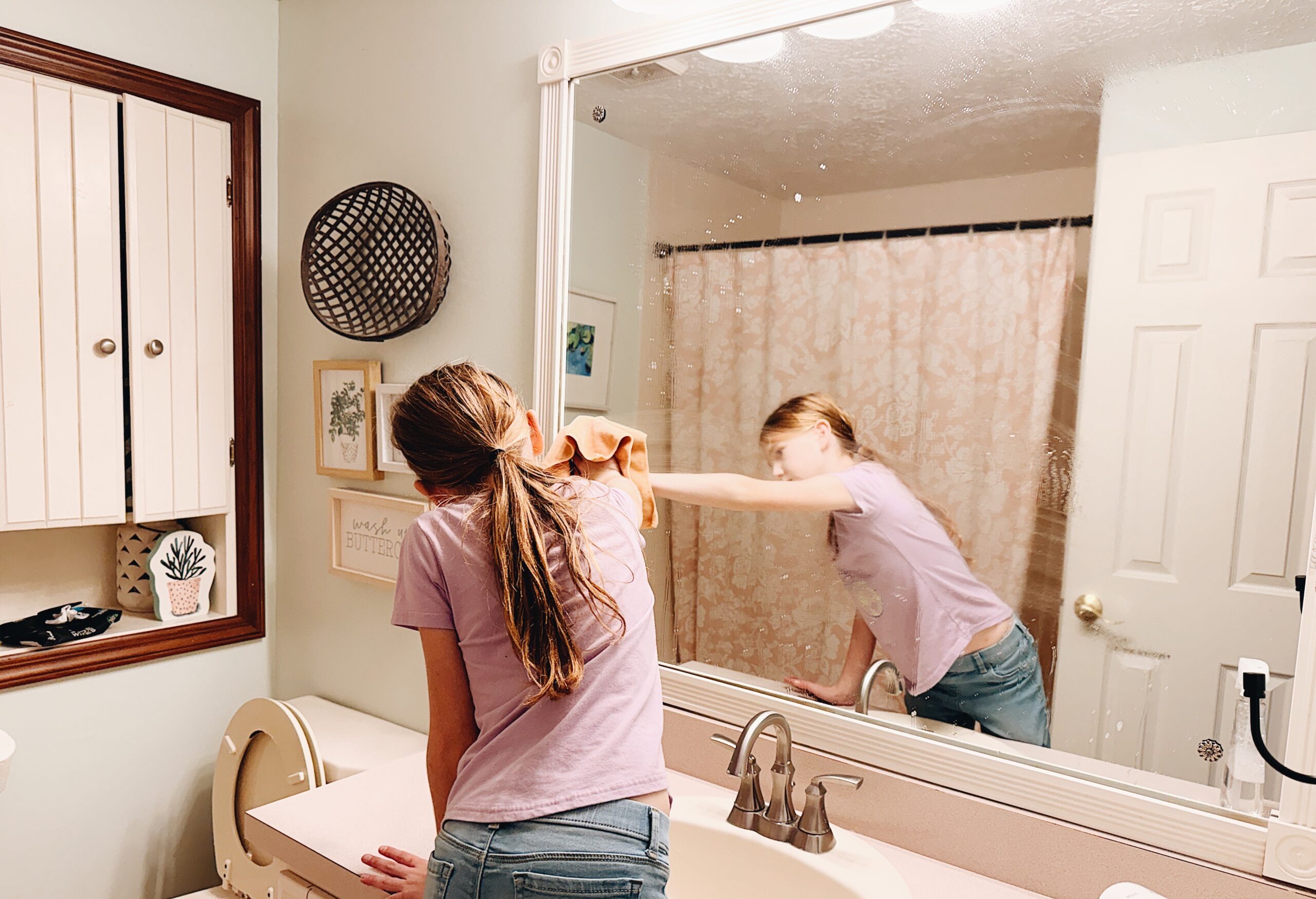
- Clean bathroom sinks and mirrors
- Organize bookshelves or craft supplies
- Fold and put away all laundry
- Help wash the car or outdoor toys
- Water indoor and outdoor plants
Teaching chores wasn’t always easy—it took patience, reminders, and a lot of grace. But now, our home feels more manageable, and my kids are learning independence, responsibility, and pride in their space.
Built-in Daily Routines to Stay Ahead
Alongside chores, I created daily routines that keep messes from piling up and my mind from feeling overloaded.
Here’s what works for us:
- Morning Reset: After breakfast, we tidy the kitchen and dining area—everyone wipes, clears, and resets their spot.
- Midday Check-In: At 5pm, we do a quick 10-minute “toy tidy” to reset the living and school space.
- Evening Sweep: After dinner, we all pitch in to load the dishwasher, wipe counters, and sweep floors.
Breaking the day into small resets helps me avoid the “giant mountain of chores” feeling. It also teaches my kids to tidy as they go—something that makes a big difference long-term.
Let Go of Perfection (Seriously)
One of the hardest lessons I’ve learned is that my home will never be perfectly clean—and that’s okay.
As a homeschooling mom, our home is lived-in, full of learning, and yes—sometimes messy.
The goal isn’t spotless. It’s functional, comfortable, and full of life.
Now, I let the kids create, learn, and play without guilt, knowing that cleanup is just part of the process. That mindset shift has brought me so much peace.
Final Thoughts
Keeping a tidy home while homeschooling three kids isn’t about doing it all perfectly—it’s about setting systems, sharing the load, and giving yourself grace.
If you’re feeling overwhelmed, start small:
- Declutter one area
- Teach one new chore at a time
- Celebrate small wins with your kids
Each step adds up to a calmer, more peaceful home.
You’ve got this!
Faith Reflection
When I start to feel buried under the clutter and chaos, I remind myself that peace doesn’t come from perfection—it comes from His presence.
“Whatever you do, do it from the heart, as something done for the Lord and not for people.”
— Colossians 3:23, CSB
Every load of laundry, every sweep of the floor, every moment teaching your child responsibility—it’s all sacred work.
You’re not just maintaining a home—you’re cultivating a haven where love, learning, and faith can flourish.